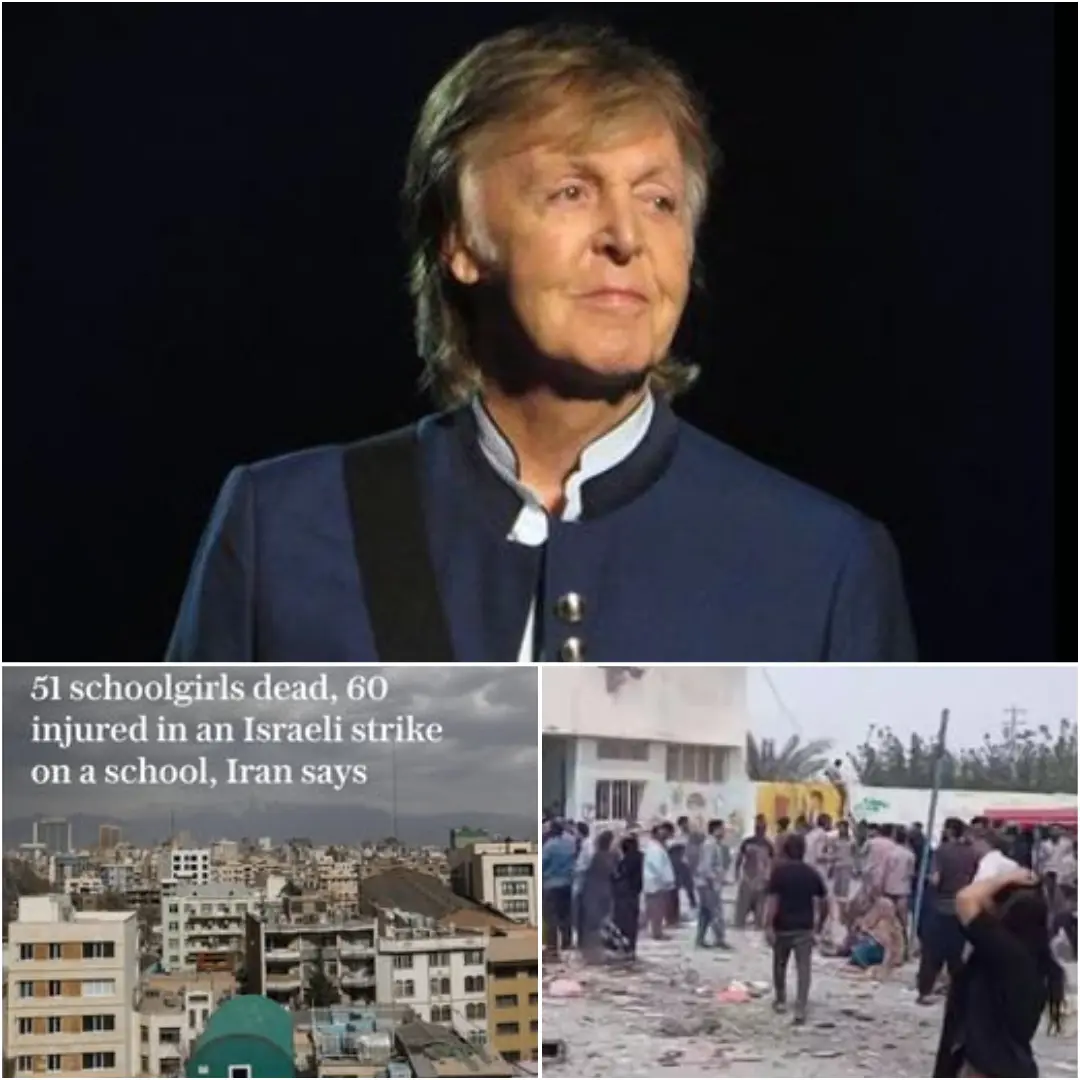
Global attention turned sharply toward the humanitarian crisis unfolding in southern Iran this week after reports emerged that legendary musician Paul McCartney has pledged his entire $5 million in recent career bonuses and sponsorship earnings to support emergency relief and medical aid for victims of a tragic elementary school strike. The donation, confirmed during an emotional press conference, is intended to provide immediate assistance to grieving families and critical care resources to survivors caught in the escalating conflict.
The strike, which reportedly targeted an area near a primary school, has intensified international concern about civilian safety in regions affected by rising tensions. While official casualty figures remain fluid as rescue operations continue, humanitarian organizations on the ground describe scenes of devastation, with medical facilities stretched beyond capacity and families scrambling for information about missing loved ones. Images circulating globally have underscored the human cost of the violence, particularly its impact on children.
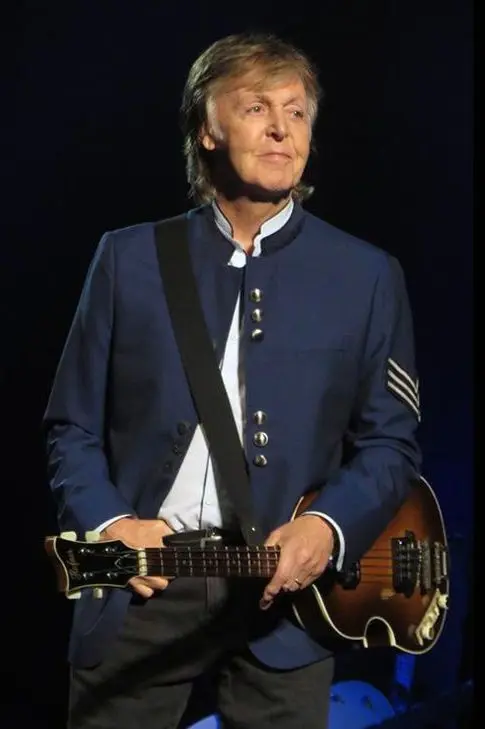
McCartney, visibly moved as he addressed reporters, said he felt compelled to act after seeing coverage of the aftermath. “I’ve seen the reports of those innocent children in the south, and I promised myself that if I ever had the chance to help those caught in the crossfire of this war, I’d step up,” he said. “No child should have to face that kind of tragedy, and no family should have to mourn such a loss alone.” His voice reportedly faltered as he described the images that had stayed with him — classrooms reduced to rubble, backpacks scattered in dust, parents searching through debris.
According to representatives for the musician, the $5 million will be directed through established internatio
 nal relief organizations with experience operating in conflict zones. The funds are expected to cover emergency surgical care, trauma counseling for children and families, temporary housing assistance, and the rapid reconstruction of essential school infrastructure where possible. A portion of the donation will also reportedly be allocated to medical supply shipments, including antibiotics, burn treatments, and portable trauma kits.
Humanitarian experts note that immediate medical response is often the most urgent need following such strikes. In conflict-affected regions, hospitals frequently face shortages of blood supplies, anesthetics, and surgical equipment. The sudden influx of injured civilians — especially children — can overwhelm already fragile systems. By earmarking funds specifically for emergency care and psychological support, McCartney’s contribution aims to address both visible injuries and the less visible emotional trauma that can linger long after headlines fade.
The announcement has sparked widespread reaction across social media, with fans and fellow artists praising the move as a powerful example of using influence and resources for humanitarian purposes. Many have highlighted McCartney’s long history of advocacy, from campaigns promoting peace to benefit concerts supporting disaster relief. While the current crisis is geographically distant from his home country, supporters argue that compassion knows no borders.
International observers caution, however, that charitable contributions, while vital, cannot substitute for diplomatic solutions to ongoing conflict. Aid organizations have repeatedly called for de-escalation and the protection of civilian infrastructure, particularly schools and hospitals, which are protected under international humanitarian law. The strike has renewed urgent conversations among policymakers about the vulnerability of children in modern warfare and the responsibility of global actors to safeguard noncombatants.
In southern Iran, local volunteers and emergency crews continue search-and-rescue efforts amid damaged buildings and disrupted utilities. Witness accounts describe chaos in the immediate  aftermath, with neighbors rushing toward the blast site to pull survivors from rubble before ambulances arrived. Electricity outages and blocked roads have complicated relief operations, underscoring the importance of coordinated international assistance.
Medical professionals working in the region have stressed the need for long-term rehabilitation services, especially for young survivors who may face permanent physical injuries or deep psychological scars. Trauma specialists emphasize that children exposed to violent events are at heightened risk for anxiety disorders, depression, and post-traumatic stress. Sustained funding for counseling programs and safe community spaces will be essential in helping them recover.
McCartney’s team indicated that transparency will be a key component of the initiative. Updates detailing how funds are distributed and what programs are supported are expected to be shared publicly in the coming months. The musician also encouraged others in the entertainment industry to consider contributing in whatever ways they can. “If you have a platform, use it,” he reportedly told attendees at the press conference. “If you have resources, share them. Even small acts can mean the world to someone who’s lost everything.”
Political analysts note that high-profile humanitarian gestures can sometimes influence broader public discourse, drawing sustained attention to crises that might otherwise slip from global focus. Celebrity involvement often brings media coverage that extends beyond traditional diplomatic reporting, amplifying the voices of aid workers and affected families. However, experts also warn of the need to center local leadership and community-driven solutions rather than overshadowing them.
For families directly affected by the strike, immediate needs remain stark and urgent. Temporary shelters have been established in community centers and religious buildings. Donations of food, clean water, blankets, and clothing are being coordinated by regional charities. In some neighborhoods, volunteers have set up makeshift classrooms in undamaged structures to restore a sense of normalcy for children displaced by the attack.
The broader geopolitical context surrounding the conflict remains complex, with tensions influenced by regional rivalries, security concerns, and shifting alliances. While diplomatic channels continue to operate, humanitarian organizations stress that the protection of civilians must remain paramount regardless of political disputes. Schools, in particular, are recognized internationally as sanctuaries that should never become targets.
As global leaders issue statements of concern, the spotlight generated by McCartney’s donation has reignited calls for a ceasefire and independent investigations into the circumstances surrounding the strike. Advocacy groups are urging transparency and accountability to prevent further tragedies. In parallel, aid agencies are mobilizing additional resources, anticipating that medical and psychological support will be required for months, if not years.
For McCartney, whose decades-long career has been defined by music that often speaks of l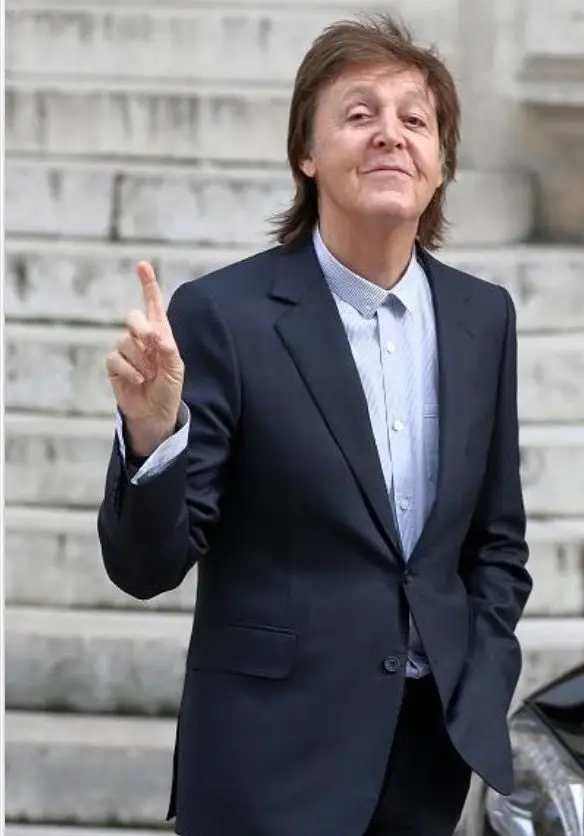 ove, unity, and hope, the decision to redirect personal earnings toward crisis relief appears consistent with themes that have echoed through his songs. Observers say the move reflects a belief that cultural figures can play a meaningful role in responding to human suffering, even when solutions require collective political will.
As relief efforts continue in southern Iran, the coming weeks will test the resilience of affected communities and the effectiveness of international support. While no donation can undo the pain of lives lost, sustained assistance may help survivors rebuild and find stability amid uncertainty. The tragedy has once again underscored the fragility of civilian life in conflict zones — and the profound impact that swift, compassionate action can have in moments of crisis.
In a world often numbed by constant streams of distressing news, the image of a global music icon choosing to channel his resources toward children caught in violence has resonated deeply. Whether the gesture inspires broader mobilization remains to be seen. For now, families in southern Iran face the difficult road ahead, supported by local courage, international solidarity, and a reminder that even from far away, voices can rise in defense of those who need it most.