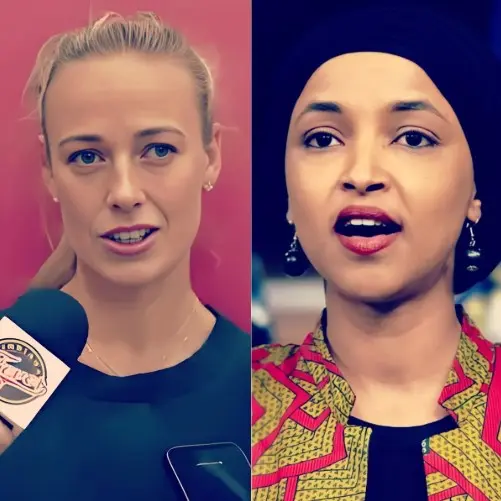
In the speech, Cunningham reportedly criticized Ilhan Omar, the Somali-American congresswoman, calling her a “real threat to American values.” She went further, stating, “We have opened our hearts with kindness, but in return, we receive contempt for our Constitution and culture from some. It’s time to defend the silent majority!” The phrase “starting with Ilhan Omar” immediately became the focal point of the controversy, trending across platforms within minutes.
Civil rights organizations were quick to respond, characterizing the remarks as xenophobic and discriminatory. Advocates emphasized that calling for the deportation of an entire ethnic or national group crosses a line from political disagreement into collective punishment rhetoric. Legal scholars also noted that such statements ignore constitutional protections and the fact that Ilhan Omar is a naturalized U.S. citizen and an elected official chosen by voters in her district.
Political leaders from both parties weighed in. Some strongly condemned the comments, describing them as divisive and harmful in an already polarized climate. Others defended Cunningham’s right to free speech, while distancing themselves from the substance of the remarks. The debate rapidly evolved from the specific statement to broader questions about how public figures use their platforms and where the boundaries of acceptable discourse lie.
Supporters of Cunningham argue that she was expressing frustration about immigration policy and national identity rather than targeting individuals based on ethnicity. They frame her comments as blunt political speech reflective of broader dissatisfaction among certain voter groups. Online forums sympathetic to her stance described the reaction as “overblown,” suggesting critics are too quick to label controversial opinions as hateful.
However, critics counter that rhetoric calling for mass deportation of a specific ethnic community cannot be separated from its discriminatory implications. They stress that political debate over immigration policy is legitimate, but targeting a group defined by nationality or heritage moves into dangerous territory. Many pointed out that such language can contribute to stigmatization and even real-world harm.
The entertainment and sports worlds also reacted swiftly. Fellow athletes issued statements emphasizing inclusivity and unity, while some sponsors were reportedly reviewing their relationships. Analysts note that professional athletes increasingly operate in a space where personal views, brand identity, and social responsibility intersect. In today’s media environment, a single speech can trigger immediate and far-reaching consequences.
The controversy underscores how quickly public discourse can escalate in the digital age. A clip lasting less than a minute can become a viral flashpoint, amplified by partisan commentators and algorithm-driven feeds. What may begin as a speech to a live audience transforms into a national — and sometimes global — confrontation within hours.
At the heart of the debate is a deeper tension about identity, immigration, and the meaning of “American values.” For some, those values emphasize border control and cultural cohesion. For others, they center on pluralism, constitutional rights, and the protection of minority communities. When rhetoric shifts from policy critique to sweeping condemnation of an entire group, the conversation becomes even more volatile.
Neither Cunningham nor her representatives have issued a detailed follow-up clarification at the time of reporting. Observers say the next steps — whether an apology, clarification, or further defense — will likely shape how the situation unfolds. In high-profile controversies, tone and timing often influence public perception as much as the original statement.
Ultimately, the episode highlights the fragile balance between free expression and responsible speech. Public figures wield enormous influence, and their words can resonate far beyond the immediate context in which they are spoken. As reactions continue to pour in, the broader national conversation about immigration, inclusion, and civic discourse shows no sign of slowing.
What remains clear is that statements invoking the deportation of entire communities strike at deeply sensitive fault lines in American society. Whether this controversy leads to reflection, retrenchment, or further polarization may depend on how leaders — both political and cultural — choose to engage in the days ahead.